In today’s rapidly changing digital environment, schools are expected to provide quality education and perform complex administrative tasks.
Starting from the admission process of students, their attendance, fee management, and communication with parents, schools perform a variety of tasks on a daily basis.
Despite the complexity of these tasks, many schools are still using manual processes or outdated technology.
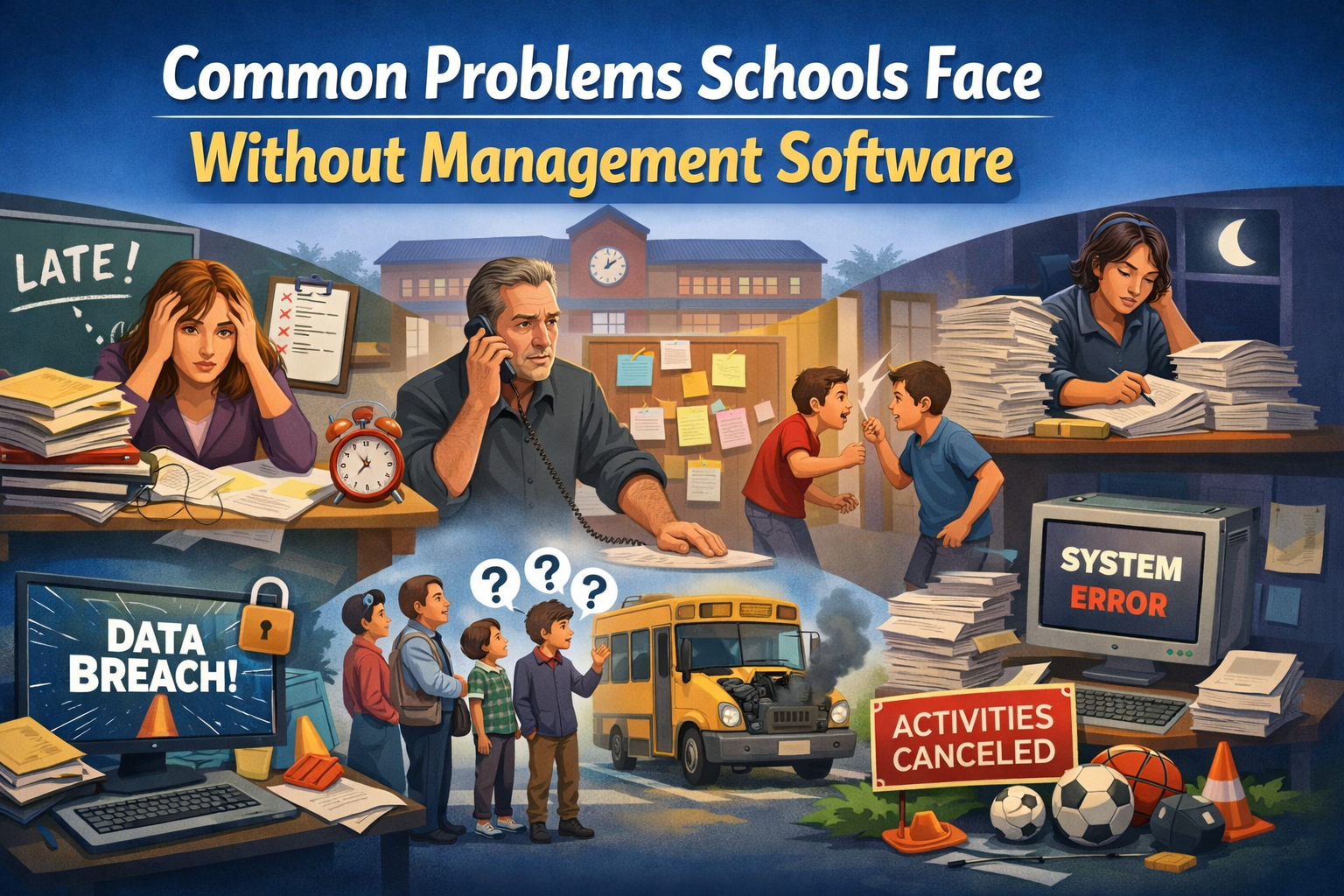
These management issues not only affect the productivity of school staff but also impact the learning process of students and the satisfaction of parents.
This article will discuss the problem school faced without management software and why it has become an essential requirement for schools in today’s digital environment.
The Growing Complexity of School Administration
School management today is much more complex than it was a decade ago. Schools have to deal with the following:
- Student records
- Academic performance
- Staff schedules
- Payroll and finances
- Compliance and reporting
- Parent communication
- Online learning systems
If these tasks are not managed with the help of proper school management software, it becomes impossible to deal with them.
Lack of Centralized Data Management
One of the major issues that schools can experience without management software is the scattered and disorganized nature of the data.
Multiple Records, Multiple Errors
When schools use paper documents, Excel sheets, and other digital tools separately, it leads to data being stored in multiple places. This results in:
- Duplicate records
- Inconsistent data
- Missing data
- Multiple errors
For example, the data of students may vary from department to department, causing confusion during exams, admissions, or payments.
Difficulty in Accessing Information
Without a centralized school management system, staff members waste their valuable time searching for files or confirming data. Simple tasks such as retrieving attendance records or exam results can take hours instead of minutes.
This lack of accessibility is a major challenge in school administration and reduces overall productivity.
Inefficient Admission and Enrollment Processes
Admissions are the foundation of every educational institution. However, schools without management software often struggle to manage this process effectively.
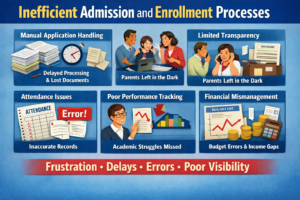
Manual Application Handling
Traditional admission processes involve physical forms, manual data entry, and repeated verification. This leads to:
- Delayed processing
- Lost documents
- Data entry mistakes
- Long waiting periods for parents
These administration management problems can harm the school’s reputation and create a poor first impression.
Limited Transparency
Without digital systems, parents have little visibility into the admission status. Frequent inquiries increase the workload of administrative staff and create frustration on both sides.
Poor Attendance and Academic Tracking
Attendance and academic tracking are important aspects of student development. Unfortunately, most schools are still using paper-based attendance registers or simple spreadsheets.
Errors in Attendance Records
There are a number of issues that come with manual attendance record-keeping, including:
- Inaccurate recording
- Loss of data
- Delays in recording
- Problems in generating reports
This makes it hard to identify attendance trends and offer assistance to students on time.
Poor Performance Tracking
It is hard to track performance without school management software. Teachers have to do the tracking manually, which limits them from identifying poor performance trends and coming up with strategies for students.
This is a big problem in school management, particularly when it comes to academic planning and tracking.
Financial Management and Fee Collection Problems
Financial transactions are the most sensitive in school management. Without a good school management system, financial management is highly risky.
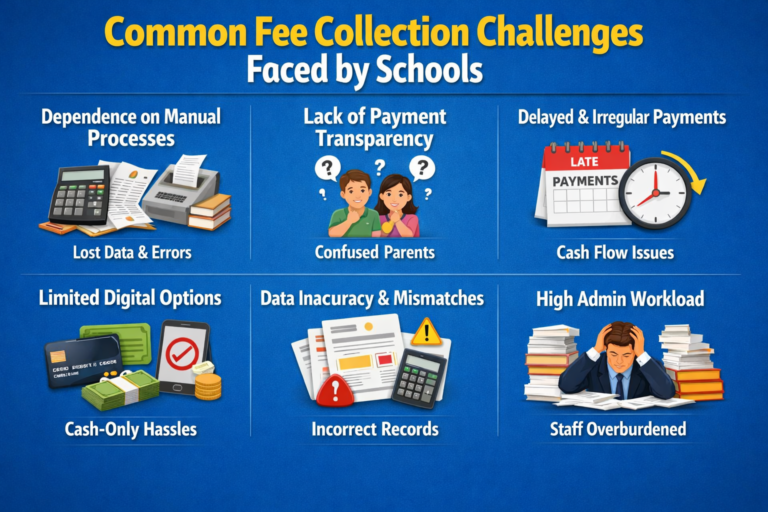
Inaccurate Fee Records
The following are some of the disadvantages of manual fee record-keeping systems:
- Lost receipts
- Disputes over payments
- Delays in payment
- Inaccurate statements
Parents can dispute the records, and it will be hard for school administrators to address the problems on time.
Poor Financial Transparency
Manual preparation of financial statements is a boring and error-prone process. Schools can have problems tracking their income, expenses, and budgets.
Communication Gaps with Parents and Staff
Communication is the backbone of a successful learning environment. Unfortunately, schools that do not have management software have serious communication gaps.
Delayed Announcements
Important announcements regarding exams, holidays, events, or emergencies are made through paper notices or phone calls. This leads to:
- Delayed announcements
- Unattended announcements
- Miscommunication
Limited Parent Involvement
Parents cannot access their child’s educational information online. This leads to a lack of transparency and trust.
These problems in school administration affect the parent-school relationship.
Increased Workload and Staff Burnout
Manual administrative workloads are a burden on the teaching staff.
Time Spent on Paperwork
Without management software, staff members spend countless hours on:
- Filling out forms
- Updating records
- Preparing reports
- Dealing with files
This leaves them with less time to focus on teaching, guiding, and developing.
Reduced Job Satisfaction
Continuous administrative pressure leads to stress and burnout. Over time, this affects employee morale, retention, and overall performance.
Compliance and Reporting Difficulties
Schools are required to comply with various regulatory guidelines related to education boards, government authorities, and accreditation bodies.
Manual Report Preparation
Without a digital school management system, preparing compliance reports becomes complicated. Data must be collected from multiple departments and verified manually.
This increases the risk of:
- Inaccurate submissions
- Missed deadlines
- Legal complications
- Limited Data Security
Paper-based and fragmented systems are more vulnerable to data loss, theft, and unauthorized access. Protecting sensitive student and staff information becomes challenging.
Limited Support for Digital Learning Initiatives
Modern education is becoming more reliant on digital learning tools, online assessments, and virtual learning environments. Schools without management software face difficulties in dealing with these changes.
Lack of Integration
The lack of integrated platforms makes it difficult to integrate learning management systems, online learning resources, and assessment systems.
Decreased Learning Flexibility
Students are deprived of opportunities for personalized learning paths, digital assignments, and immediate feedback.
How a School Management System Solves These Challenges
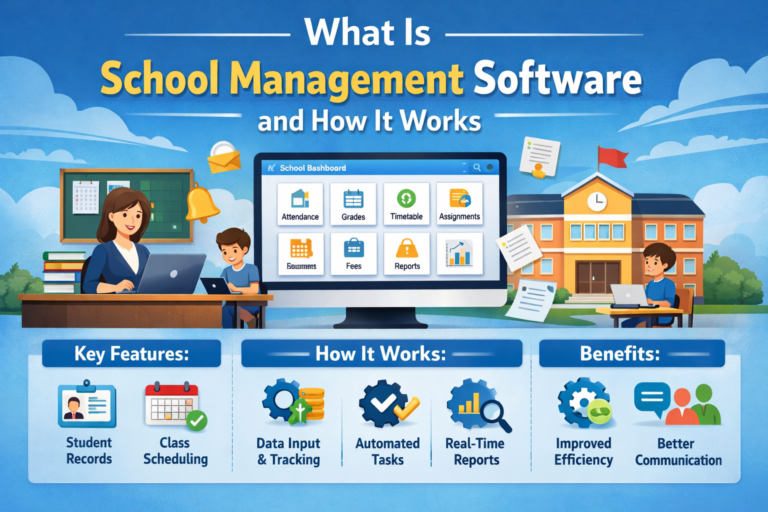
A contemporary school management solution provides a solution to most of the management issues that are associated with schools.
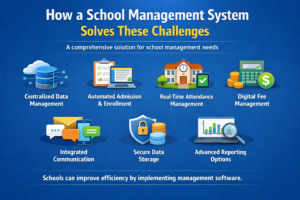
It provides:
- Centralized data management
- Automated admission and enrollment processes
- Real-time student attendance management
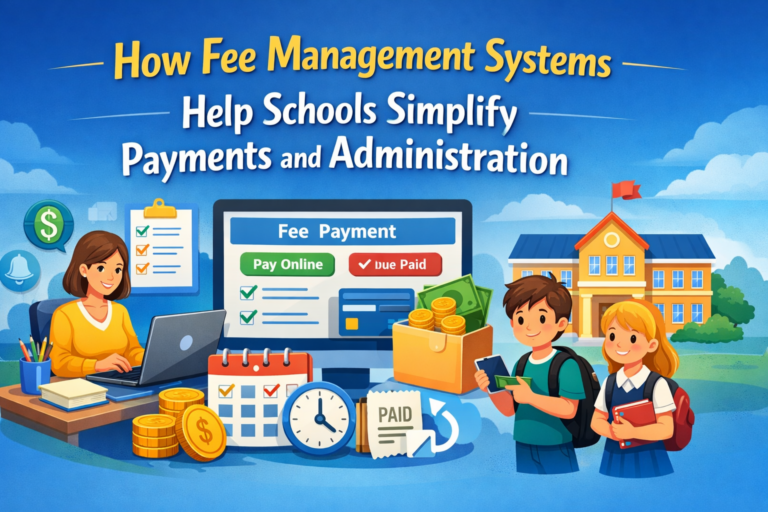
- Digital fee management
- Integrated communication platforms
- Secure data storage
- Advanced reporting options
Schools can improve efficiency by implementing management software.
Long-Term Benefits of Using Management Software
A good school management system is an investment that yields long-term benefits, including:
- Increased efficiency of operations
- Informed decision-making through data analysis
- Increased parent and student satisfaction
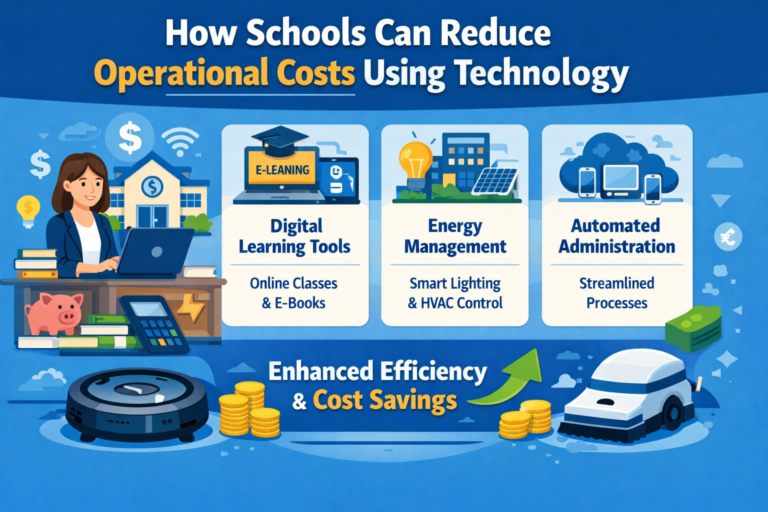
- Decreased administrative expenses
- Improved reputation
In the long run, schools will be able to concentrate more on educational excellence and less on operational difficulties.
To wrap up
The problems schools face without management software are becoming more evident in today’s technology-driven world.
Starting from data management to discrepancies in finances, communication problems, and employee burnout, the conventional approach to management is riddled with problems and challenges to development and productivity.
The problems and challenges that schools face in management not only create challenges to the running of a school but also affect the school’s ability to deliver quality education to students.
With the implementation of a new and better school management system and partnership with reputable management software companies such as Cadence, schools can easily run their operations and establish a conducive environment for students, teachers, and parents.
In today’s competitive and technology-driven education industry, management software is no longer a luxury but a necessity for success.