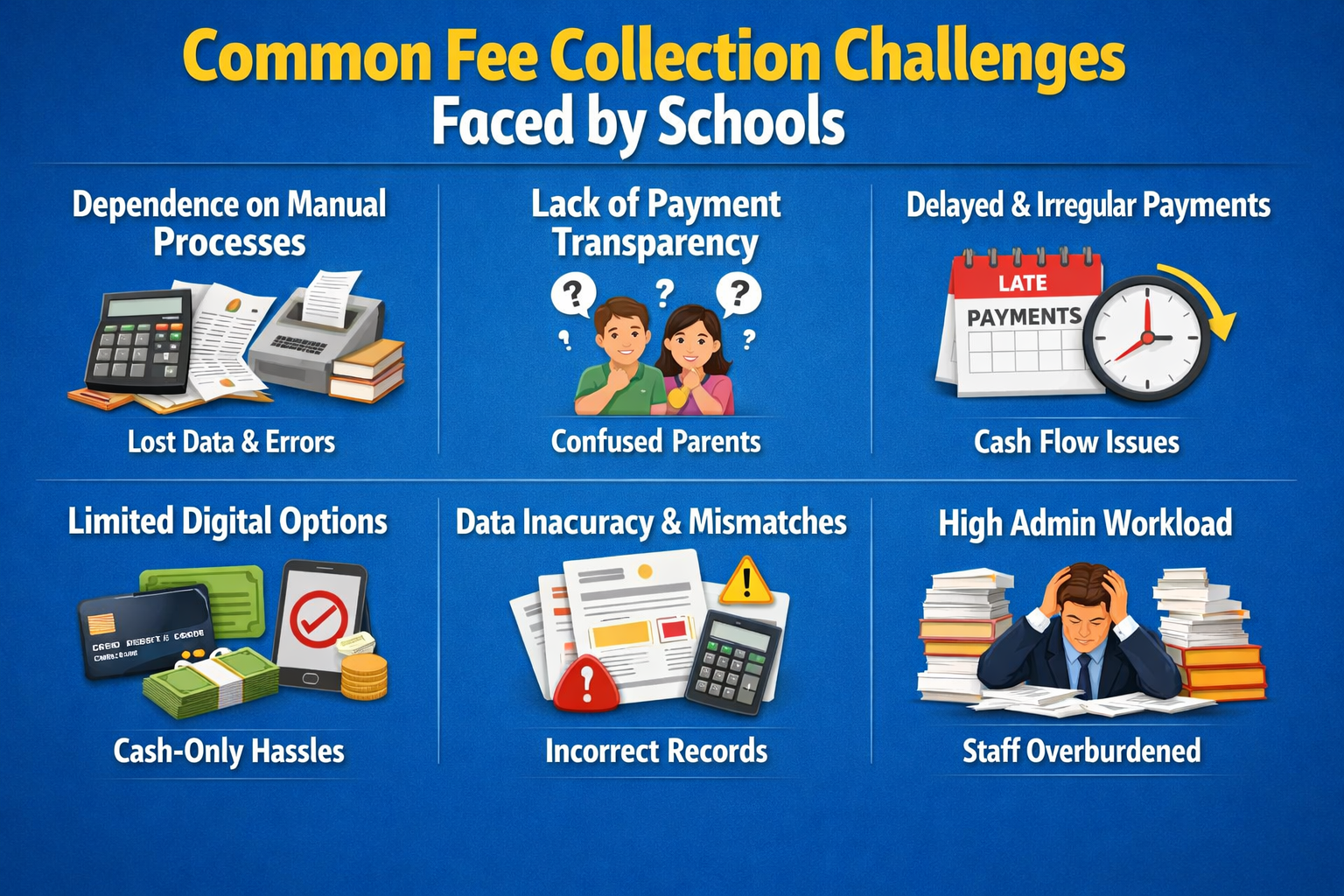
Fee collection is one of the most important administrative tasks for any educational institution. Schools depend greatly on the effective collection of fees to run the organization.
Despite this, many schools are still struggling with inefficient fee collection systems and a lack of technology support.
In today’s rapidly changing education sector, schools need to implement new technologies like learning management software for schools, fee management software, and education management software to address these challenges.
A good fee management system not only helps with fee collection but also enhances accountability. This article mentioned the various challenges that schools face during fee collection and how technology can help schools manage their finances effectively.
So, let’s get started.
Importance of an Efficient Fee Management System
An effective fee payment process is essential for smooth flow of funds and enhances the financial stability of the school. Delays in payments can impact budgeting, resource allocation, and development of the school.
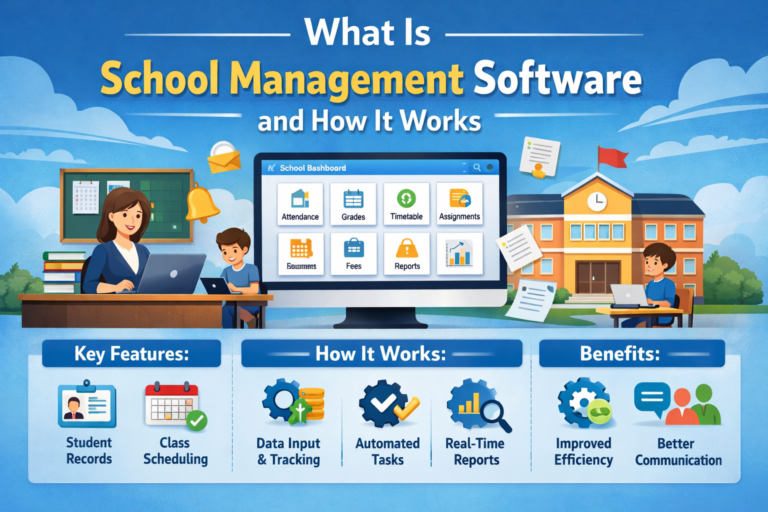
A fee management system integrates payment tracking, reporting, reminders, and reconciliation. When combined with learning management software for schools, it provides a holistic environment that facilitates both academic and administrative activities.
In the absence of these tools, schools experience hustle in their operations that affects the productivity of employees and parent satisfaction.
Common Fee Collection Challenges Faced by Schools
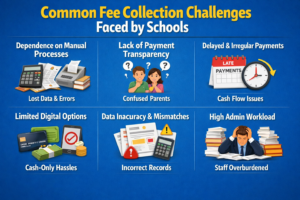
1. Dependence on Manual Processes
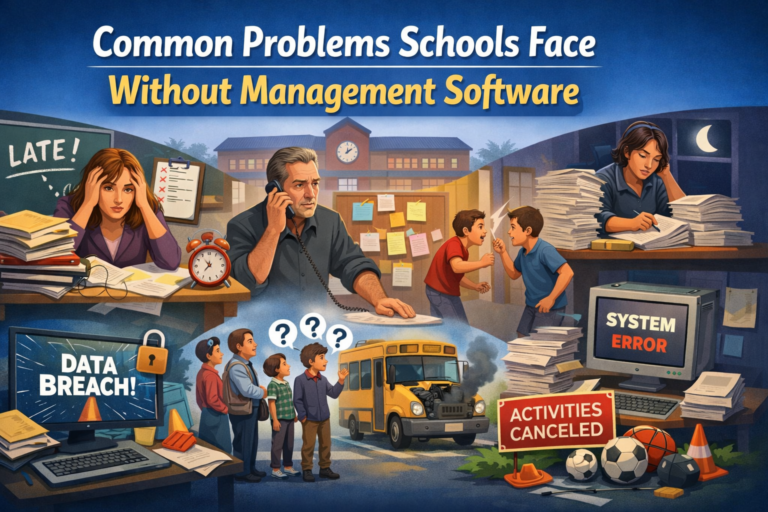
Most schools are still using the manual system of cash payments, paper receipts, and register books. The traditional system is very time-consuming and error-prone.
Manual fee collection causes:
- Lost data
- Inaccurate data entry
- Delays in updating
- More work for the administrative staff
It becomes very difficult to manage thousands of transactions if there is no software to manage the fees.
2. Lack of Payment Transparency
Parents may feel puzzled about the fee structure, deadlines, late charges, and pending fees. When the information is not shared in a proper manner, it leads to confusion and disputes.
A poor fee management system causes:
- Lack of clarity in the fee statement
- Complaints from parents
- Follow-ups
- Lack of trust
An all-in-one education management software solution helps parents access the fee details at any time.
3. Delayed and Irregular Payments
Late payments are one of the biggest financial challenges that schools face. Many parents fail to meet deadlines due to forgetfulness, busy schedules, or the lack of reminders.
Late payments impact:
- Cash flow
- Payments to vendors
- Payment of staff salaries
- Maintenance of infrastructure
Schools lack the ability to send automated reminders to defaulters without a smart fee management system.
4. Limited Digital Payment Options
In today’s digital era, parents demand flexible and secure online payment options. Schools that accept only cash or checks may encounter resistance and difficulties.
Limited payment options result in:
- Long queues at the fee counter
- Increased administrative workload
- Chances of mishandling cash
- Negative experience for parents
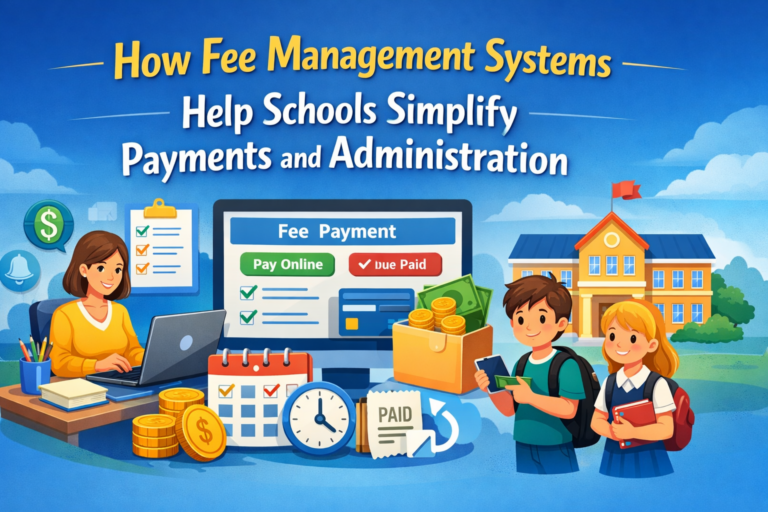
An efficient fee management software allows various payment gateways, which enable parents to make payments using cards, net banking, UPI, and mobile wallets.
5. Data Inaccuracy and Record Mismatches
Having correct financial information is important for auditing and compliance purposes. Manual processes tend to result in differences in financial statements, repeated entries, and lost information.
Some of the problems associated with the current system include:
- Inconsistencies between receipts and accounts
- Inaccurate information about students
- Incorrect information about outstanding balances
- Problems encountered during auditing
With the use of education management software, schools are able to have accurate financial information in real time.
6. Poor Integration with Academic Systems
In most institutions, the management of fees is done independently of the academic and administrative processes. This makes it difficult to have a clear picture.
For example:
- Defaulters in fees can still use academic services
- It is difficult for administrators to link academic and fees information
- Reporting becomes a challenge
When a fee management system is integrated with learning management software for schools, it provides a single platform that enhances coordination and decision-making.
7. High Administrative Workload
The school administration usually has a high workload in terms of performing tasks such as issuing receipts, making entries, answering queries, and generating reports.
This has the effect of:
- Decreasing productivity
- Increasing stress
- Preventing focus on strategic planning
- Causing delays in operations
The fees management software automates the process, allowing administrators to focus on more important tasks.
How Technology Helps Overcome Fee Collection Challenges
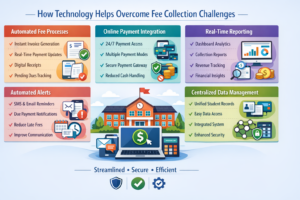
1. It automates the fee processes
Modern education management software automates fee generation, billing, receipts, and reporting. Automation minimizes human errors and ensures consistency across all transactions.
With automated systems, schools can:
- Generate invoices instantly
- Update payment status in real time
- Issue digital receipts
- Track pending dues efficiently
2. Online Payment Integration
A smart fee management system offers secure online payment gateways that support multiple modes of payment. This convenience encourages parents to pay on time.
Online integration enables:
- 24/7 payment access
- Faster transactions
- Reduced cash handling
- Improved financial transparency
3. Real-Time Tracking and Reporting
Advanced fees management software provides detailed dashboards and analytics that help administrators monitor collections, pending amounts, and revenue trends.
These insights support:
- Better financial planning
- Accurate budgeting
- Compliance management
- Strategic decision-making
4. Automated Alerts and Notifications
Timely reminders play a crucial role in reducing late payments. Integrated systems send automated SMS, email, and app notifications to parents.
This feature:
- Improves payment discipline
- Reduces follow-ups
- Enhances communication
- Strengthens parent-school relationships
5. Centralized Data Management
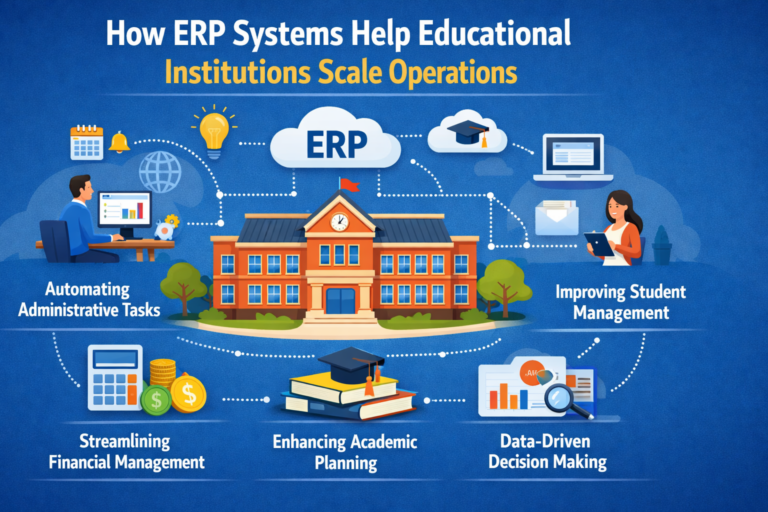
By combining financial, academic, and administrative data, learning management software for schools and education management software create a unified digital ecosystem.
Centralized systems ensure:
- Consistent student records
- Easy data retrieval
- Better coordination
- Improved data security
Long-Term Benefits of Digital Fee Management
Implementing a modern fee management solution provides long-term advantages that extend beyond simple payment collection.
- Improved Financial Stability
Consistent and timely payments strengthen cash flow and support long-term planning.
- Enhanced Parent Satisfaction
Transparent billing and convenient payment options improve trust and engagement.
- Better Institutional Reputation
Efficient financial systems reflect professionalism and reliability.
- Data-Driven Decision Making
Real-time reports and analytics enable leaders to make informed strategic decisions.
- Scalability and Growth
Digital systems easily adapt to increasing student numbers and institutional expansion.
Best Practices for Effective Fee Management
To maximize the benefits of technology, schools should follow these best practices:
- Adopt a fully integrated education management software
- Provide clear fee structures and payment schedules
- Offer multiple digital payment options
- Send regular automated reminders
- Train staff on system usage
- Monitor financial reports regularly
These practices ensure smooth operations and long-term sustainability.
Final words
The issue of fee collection still poses a significant administrative problem to schools, especially those that use outdated manual processes.
Problems such as delayed payments, inaccuracies in data, lack of transparency, and high workload are some of the issues that have continued to impact the efficiency of institutions.
However, with the use of modern technologies such as learning management software for schools, fees management software, and a fee management system, schools can easily address these problems.
An integrated education management software from Cadence offers automation, transparency, and control, which allows institutions to manage their finances with confidence.
In today’s digital education sector, the use of smart fee management systems is not a choice, but a necessity for sustainable growth.