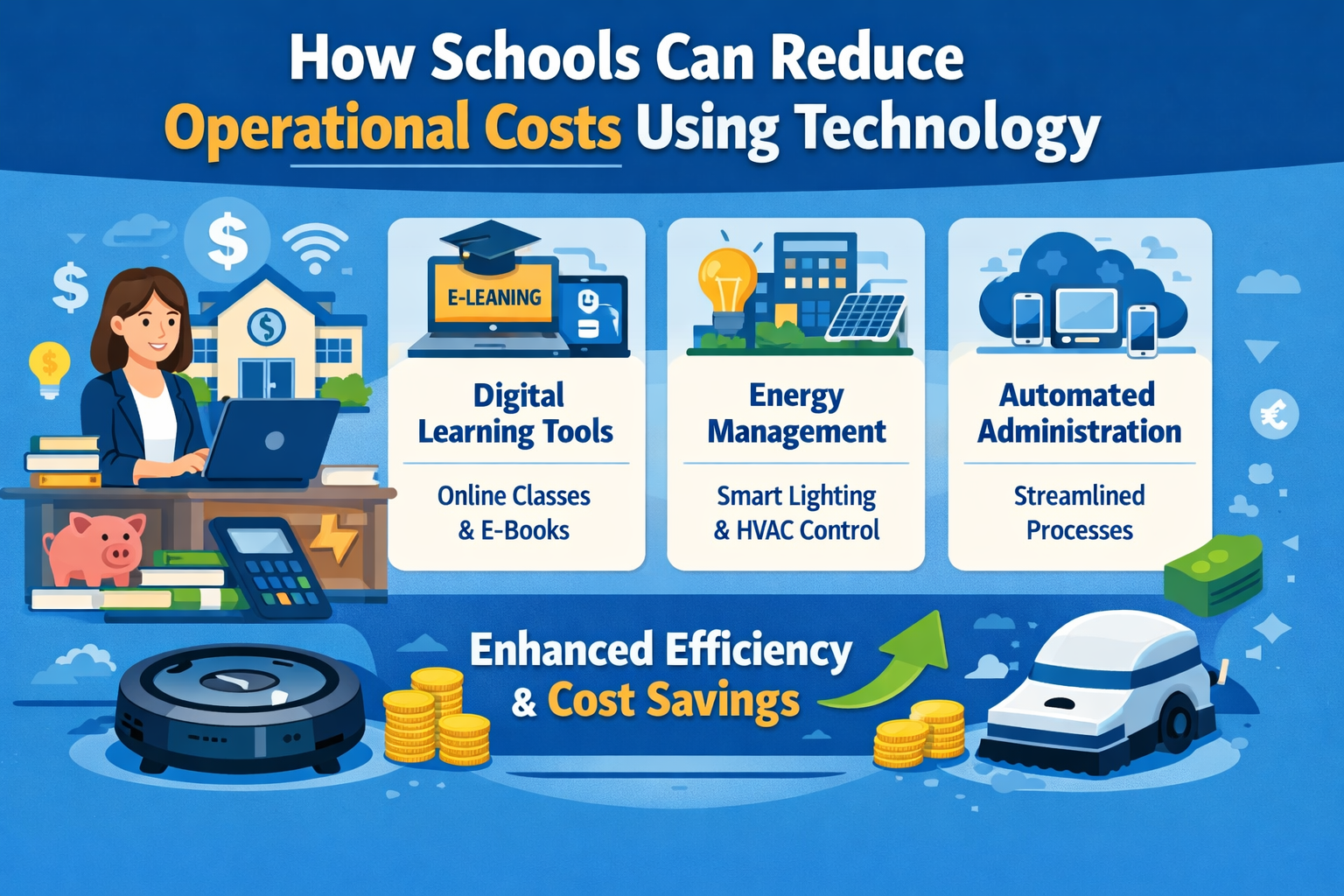
Today, running a school means maintaining a balance between academic excellence and cost-effectiveness. Starting from school administration and employee salaries to school infrastructure and learning resources, operational costs are steadily increasing.
For most schools, it has become a challenge to manage these costs without hampering quality. Technology has the answer to this question.
With the help of education ERP solutions, learning management systems for schools, and various student management software, schools can manage their operations effectively and avoid unnecessary spending.
This blog will discuss how these technical software helps schools to minimize operational costs and create a sustainable learning environment.
Knowing Operational Costs in Schools
Operational costs comprise all the expenses that are needed for the running of an institution on a daily basis. These expenses include:
- Administrative staff and documents
- Printing and stationery
- Communication systems
- Academic resource management
- Fee processing and accounting
- Infrastructure management
- Data storage and record management
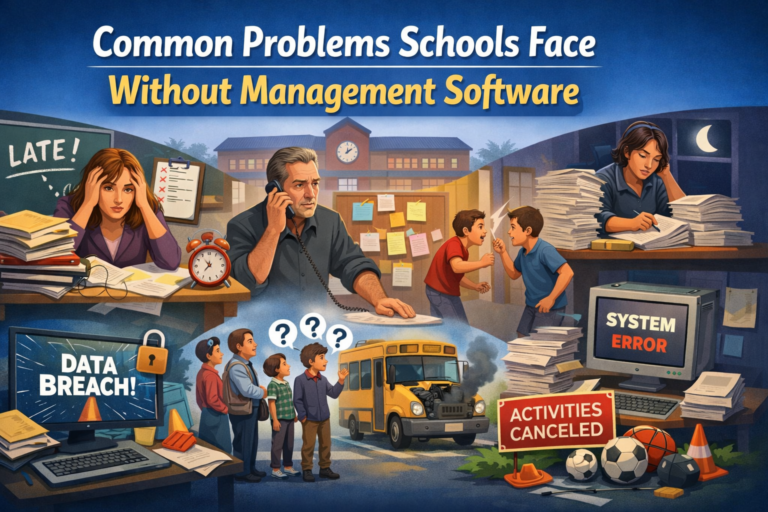
All these activities require more human resources and time when done manually. This reduces productivity and increases costs. Education ERP solution assists schools in managing all these activities.
Using Education ERP Solutions to Centralize Operations
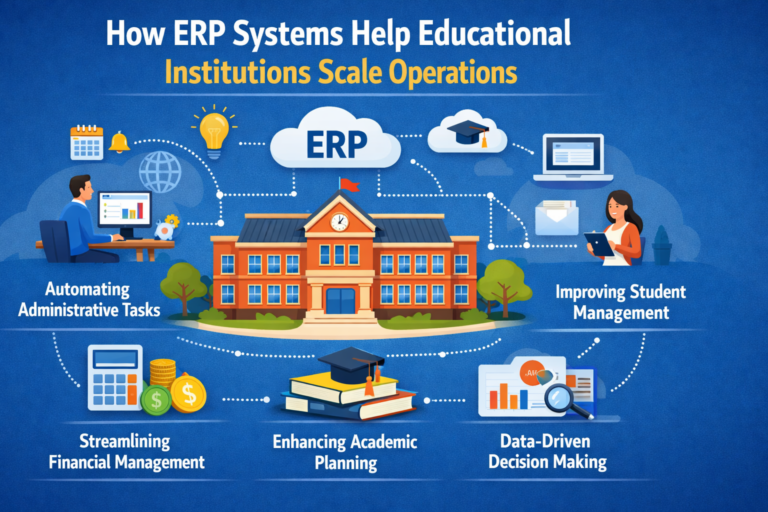
One of the most effective ways to cut costs is by using education ERP solutions. ERP solutions enable the integration of all major departments into a single digital platform.
Instead of running different systems for finance, academics, administration, and human resources, schools can now control all activities from a single platform.
Benefits of ERP Integration
Education ERP solutions assist in cutting costs by:
- Automating routine tasks
- Reducing paperwork
- Improving data accuracy
- Eliminating duplicate work
- Enhancing coordination between departments
By operating from a single platform, schools can now cut down on administrative delays and optimize staff utilization.
Reducing Academic Expenses with Online Learning Management Systems
Academic operations make a substantial contribution to the school’s budget. The cost of printing learning materials, conducting exams, and managing physical resources is continuous.
An online learning management system enables schools to go digital in their teaching and learning operations, making them less dependent on physical resources.
Online learning management systems assist schools in the following ways:
- They eliminate the cost of printing
- They cut the cost of maintaining classrooms
- They facilitate online and offline learning
- They cut the cost of training and developing resources
- They enhance resource reuse
Teachers can post teaching materials, assignments, and videos on the online platform, and students can access them at any time.
Improving Academic Administration with Learning Management Systems for Schools
In addition to content dissemination, learning management systems for schools handle the entire academic administration of the institution. Learning management systems handle the following:
- Schedules
- Curriculum development
- Assignment submission
- Examinations
- Grade reporting
Cost Advantages of Digital Academic Management
Learning management systems for schools lower operational expenses in the following ways:
- By reducing administrative work
- By reducing reliance on paper-based record-keeping
- By enhancing teacher efficiency
- By minimizing rework due to errors
Over the long term, this results in substantial savings in human and operational resources.
Streamlining Student Records with Student Management Software
Administrative departments deal with a huge amount of data from students. Handling admissions, attendance, performance, and communication manually is a time-consuming and costly process.
-
Student management software
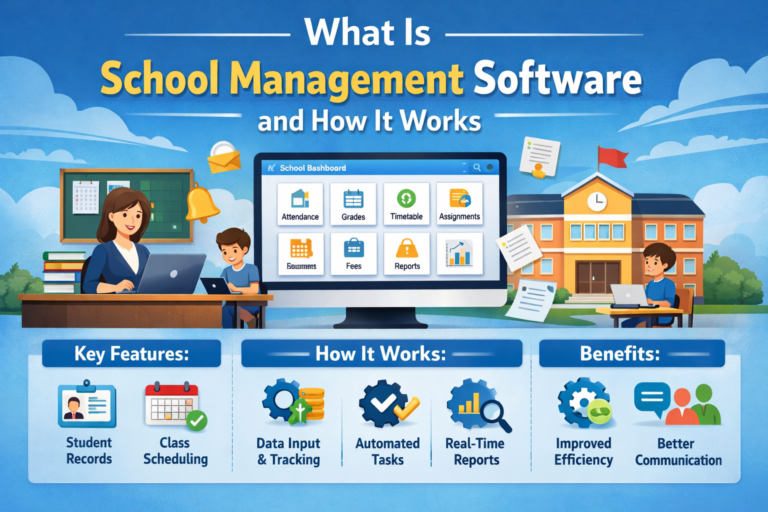
Student management software provides a secure online platform where all student-related information is stored in one place.
-
Major cost-saving features
Student management software assists schools in the following ways:
- Automate attendance management
- Manage student records online
- Streamline the admission process
- Print reports instantly
- Enhance parent communication
- Manage records digitally, which cuts storage costs and the risk of data loss.
Automating Financial Operations for Better Cost Control
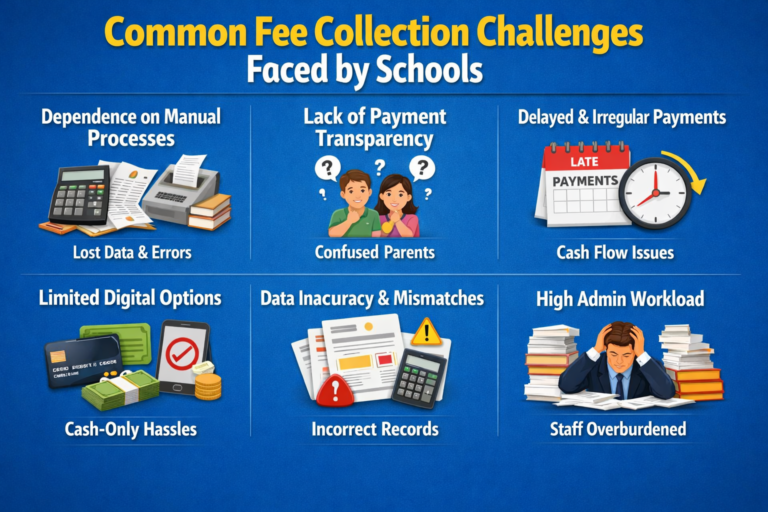
Financial management is an important area that significantly impacts the efficiency of operations. Manual processing of billing, fee collection, and accounting can lead to discrepancies, delays, and losses.
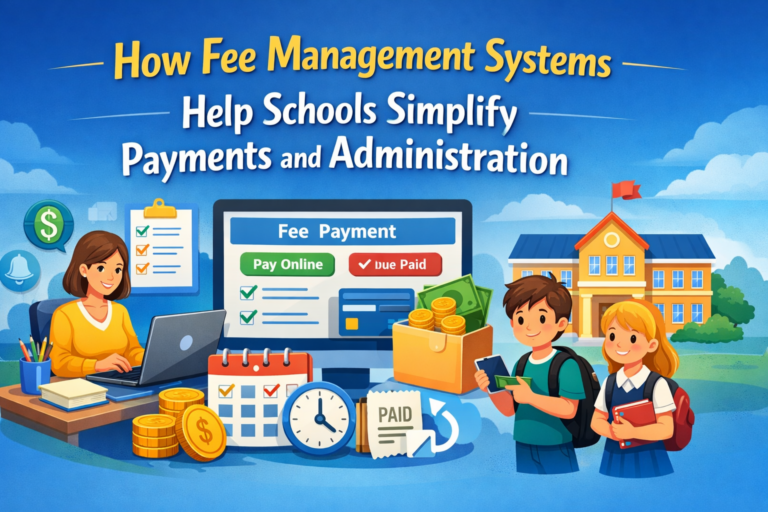
The latest education ERP systems come equipped with financial modules that can automate the following:
- Fee billing
- Online payment processing
- Scholarship management
- Cost tracking
- Budgeting
Financial Automation Benefits
Automated financial management systems help schools in the following ways:
- Reduce the workload of accounting personnel
- Avoid payment delays
- Enhance cash flow management
- Promote transparency
- Avoid calculation errors
Enhancing Communication to Minimize Hidden Expenses
Ineffective communication can result in repeated queries, failed deadlines, and administrative hassles. These problems can increase workload and administrative expenses.
Technology-enabled communication tools can enhance coordination between teachers, parents, students, and administrators.
Benefits of Digital Communication
Technology-enabled communication solutions benefit schools in the following ways:
- Save printing and postage expenses
- Reduce repetitive queries
- Enhance response times
- Avoid scheduling conflicts
Effective and accurate communication can eliminate administrative hassles and increase overall efficiency.
Using Data and Analytics for Smarter Resource Planning
Without proper data, schools can end up overspending on underutilized resources or miss areas where waste is occurring. Online management systems allow for real-time data that can help with better decision-making.
Current systems offer reports on:
- Attendance of students
- Performance of students
- Financial position
- Utilization of staff
- Utilization of infrastructure
Supporting Cost Efficiency Through Integrated Digital Solutions
Integrated digital platforms are those that integrate academic, administrative, and financial tasks into a single platform. This helps in reducing fragmentation and streamlining workflow.
The solutions offered by Cadence include the integration of education ERP solutions, e-learning management systems, and student management software into a single digital platform. This helps in streamlining operations and managing costs effectively.
Institutions can improve their performance by implementing scalable and user-friendly solutions.
Building Long-Term Financial Sustainability with Technology
Adoption of technology is not only about short-term cost savings. It is about building a sustainable operating model that enables long-term growth.
The benefits of schools adopting technology-based systems include:
- Operational costs that are predictable
- Reduced maintenance costs
- Increased staff efficiency
- Enhanced institutional planning
- Improved academic performance
Learning management systems and student management software are the basis for continuous improvement and financial sustainability.
To wrap up
Rising operational expenses are a pressing issue for educational institutions. But with the right technology, schools can better manage resources and cut unnecessary expenses.
By implementing education ERP solutions, online learning management systems, learning management systems for schools, and student management software, schools can automate processes, increase coordination, and boost productivity.
Digital transformation allows schools to think and act smarter, faster, and better. With the help of Cadence infotech, schools can create efficient and smart systems for achieving success in both academics and financials.
Technology investment today is a step towards a brighter future.